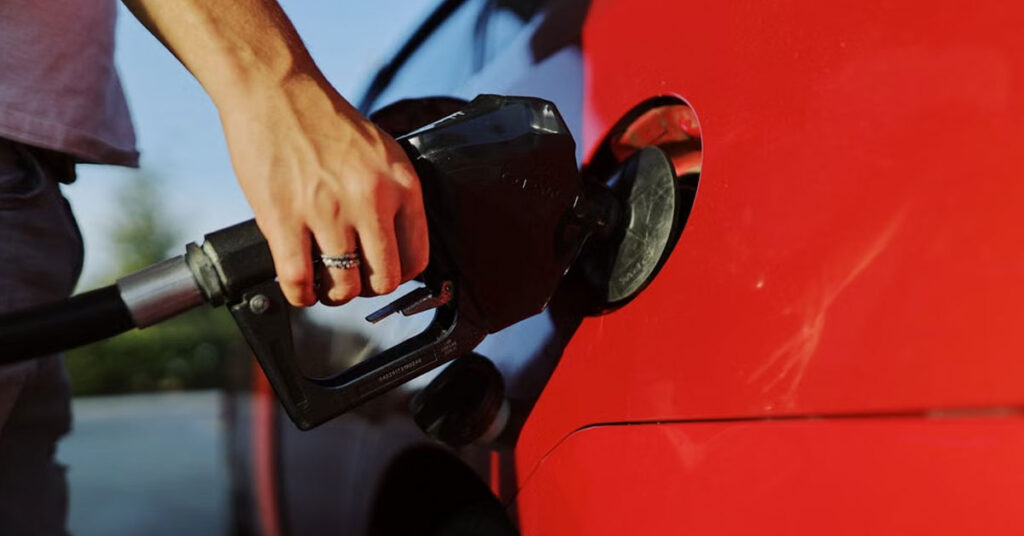
TLU SA expresses serious concern over the latest sharp increase in South Africa’s fuel prices, which has taken effect at a critical time for the agricultural sector. With the summer planting season approaching, crop farmers in particular are facing significantly higher production and transport costs, while the profitability of the coming season is already threatened by volatile market conditions and uncertainty surrounding weather patterns.
The fuel price adjustments that came into effect on 7 October 2026 increased the price of 93-octane petrol by R3.12 per litre and 95-octane petrol by R3.33 per litre. The wholesale price of diesel rose by R2.84 and R3.24 per litre respectively, depending on sulphur content. International oil prices, geopolitical tensions and uncertainty surrounding oil supplies contributed to these increases.
However, TLU SA believes that the true impact of these fuel price increases cannot be measured solely by the rise in the price per litre. Producers must now make substantial financial commitments to establish their next crop, without any certainty that their eventual income will justify the increased costs.
Bennie van Zyl, General Manager of TLU SA, says the timing of the increases is particularly concerning.
“We are talking about a period during which crop farmers must spend substantial amounts to get their next crop into the ground. These expenses cannot simply be postponed until fuel prices fall again. Farmers must now decide whether they can afford the financial risk, while still not knowing what the weather conditions, yields or eventual product prices will be.”
According to TLU SA, the impact of more expensive diesel extends far beyond the operation of agricultural machinery. Seeds, fertilisers, chemicals and other inputs must be transported to farms, after which diesel is required for land preparation, planting and harvesting. Further transport costs arise when produce is transported to silos, processing facilities and markets.
The same fuel price increase can therefore result in additional expenses at various stages of the production chain. For example, an increase of R3 per litre means that a producer using 10,000 litres of diesel will already pay R30,000 more, without taking any indirect cost increases into account.
“The problem is that farmers cannot necessarily recover these additional costs through their product prices. To a large extent, they are price takers. Their expenses are influenced by international and domestic circumstances, but their income is ultimately determined by market forces,” says Van Zyl.
TLU SA points out that even good harvests do not necessarily guarantee profitability. Rising input costs, fluctuating commodity prices and uncertainty surrounding possible El Niño conditions further increase the financial risks associated with the coming production season.
The organisation therefore believes that the most important question is not only how much more expensive food production has become, but at what point the economic risk of production begins to outweigh the potential return.
“A large harvest is not necessarily a profitable harvest. We cannot continue to use production figures as the only measure of agricultural success. If farmers have to spend more year after year to produce the same product, while retaining increasingly less income, there is a fundamental problem with the economic sustainability of that production,” says Van Zyl.
TLU SA emphasises that South Africa cannot control international oil prices, but domestic factors further aggravate their impact. Poor rural roads, limited rail transport and logistical inefficiencies unnecessarily increase the cost of agricultural inputs and products.
The proper management of South Africa’s strategic fuel reserves also deserves attention. The controversial sale of oil reserves during the tenure of former Minister Tina Joemat-Pettersson highlights the importance of responsible management and security of supply. Although strategic reserves cannot prevent international price increases, they can help limit the country’s exposure to serious supply disruptions.
“We cannot change the oil price, but we must at least ensure that we do not worsen its impact through our own inefficiencies. These are cost pressures that can be addressed within South Africa,” says Van Zyl.
TLU SA believes that producers will need to carefully assess their financial exposure to the increased costs. Joint purchasing of agricultural inputs, consolidating deliveries and reviewing transport agreements could help limit certain expenses where practically possible. However, these measures cannot eliminate the full impact of the current increases.
“Farmers are accustomed to making adjustments and continuing under difficult circumstances. But there is a limit to how many cost increases a business can absorb. We cannot expect producers to simply become more efficient every time, while the economic conditions under which they must produce continue to deteriorate.”
According to TLU SA, the consequences of these pressures could extend far beyond the farm gate. When producers decide to plant less, scale down production or postpone investment, the effects ultimately reach input suppliers, rural businesses, employment opportunities and the broader food value chain.
The organisation emphasises that food security cannot be measured solely by the amount of food available today, but also by producers’ ability to continue producing profitably in the future.
“We need to take the discussion about fuel prices beyond the next adjustment at the pump. It serves little purpose for South Africa to have sufficient food today if the producers responsible for supplying it are becoming increasingly financially vulnerable.”
Van Zyl says the country’s food security is ultimately inseparable from the profitability of its producers.
“Food production cannot be sustained through perseverance alone in the long term. Farming must make economic sense. If we lose sight of that principle, the consequences of today’s cost increases will be felt long after the next fuel price adjustment.”